403 Forbidden
ERR_WEB_NGX_403


Recessed downlights are an increasingly popular choice for bathroom lighting, thanks to their sleek and unobtrusive design. The best downlights not only enhance bathroom safety but also offer superior functionality and design benefits, making them an optimal lighting solution. These fixtures blend seamlessly into the ceiling, and flush downlights in particular create a low-profile, seamless appearance for a clean and modern look while providing the necessary resistance to water. When it comes to installing recessed downlights in your bathroom, understanding zones 1 and 2 is important for ensuring safety and compliance with the Building Regulations.
Bathroom lighting is more than just a practical necessity—it’s a key element in creating a space that feels both functional and relaxing. With so many lighting options available, choosing the right solution for your bathroom can seem overwhelming. That’s where bathroom downlights come in. These sleek, unobtrusive fixtures are designed to provide direct light exactly where you need it, making them ideal for everything from task lighting at the mirror to creating a soothing ambiance for a relaxing bath.
Thanks to their energy efficiency and modern styles, bathroom downlights are a popular choice for homeowners looking to upgrade their lighting. In this guide, we’ll explore the benefits of bathroom downlights, the different styles available, and what to consider during installation—helping you create the perfect lighting for your bathroom, no matter its size or style.
Bathrooms are divided into zones based on their proximity to water sources. These zones determine the type of lighting that can be safely installed in each area, and are designed to minimise the risk of electric shock. Zone 1 encompasses the area directly above the bath or shower, up to a height of 2.25 meters (7ft 4in) from the floor. In this zone, lights must have a minimum ingress protection (IP) rating of IP65, indicating that they are dust-tight and protected against water jets from any direction.
It is important to select suitable downlights that meet the required IP65 rating to ensure safety and compliance in this wet environment. This level of protection ensures that your lighting is both safe and functional in the wettest area of your bathroom. You can technically get away with IP44 rated downlights above the shower, but the lighting industry has standardised on an IP65 rating in recent years. Zone 2 extends 0.6 meters (1ft 11in) horizontally from the edge of Zone 1 and includes the area around the washbasin. In this zone, lights should have a minimum IP rating of IP44, meaning they are protected against solid objects over 1mm in size and splashing water. Again, choosing suitable downlights with the correct IP44 rating is essential for preventing water ingress that could cause damage or pose a safety hazard. There is also a zone 0, which is inside the bath, lights within this zone need to IP68 rated and operate on a maximum of 12V.
When selecting the perfect recessed downlights for your bathroom, it’s essential to choose fixtures with the appropriate IP rating for their intended zone, and to ensure the downlights fit both the technical requirements and the overall bathroom design. While you can mix and match downlights in different zones and even use non IP rated downlights in areas outside of the bathroom zones, its better to just go with IP65 rated throughout; then they will all match and provide adequate protection for the more delicate LED light source against moisture caused by steam.
Getting the layout right is essential for achieving the best results with your bathroom downlights. Start by considering the size and shape of your bathroom, as well as the overall effect you want to create. For small bathrooms, a general rule is to install one downlight for every 1-2 square meters of ceiling space. This ensures even, bright lighting without overwhelming the room. In larger bathrooms, you may need additional downlights to maintain consistent brightness throughout the space. Pay special attention to the position of your downlights—placing them near mirrors can enhance task lighting for grooming, while positioning them above the shower ensures a well-lit, safe area. By carefully planning your downlight layout, you can create a bathroom that feels bright, welcoming, and perfectly suited to your needs.
With the basics about IP ratings covered, lets consider 5 expert tips about what really makes the perfect bathroom downlight, utilising the very latest lighting technology on the market. Homeowners can opt for specific features or styles in their downlights to achieve the desired bathroom lighting effect and match their personal preferences.
Bathrooms don't need to be as bright as other rooms such as kitchens. While you can dim your lights, you don't want to be dazzled by overly bright lights when you enter the bathroom at night time or in the early hours of the morning. Modern LED downlights such as the Collingwood H2 Lite CSP CCT have a wattage switch which lets you switch between 4.2 watt and 6 watt modes. At 4.2 watt it produces 450 to 520 lumens and at 6 watt it produces 625 to 720 lumens.
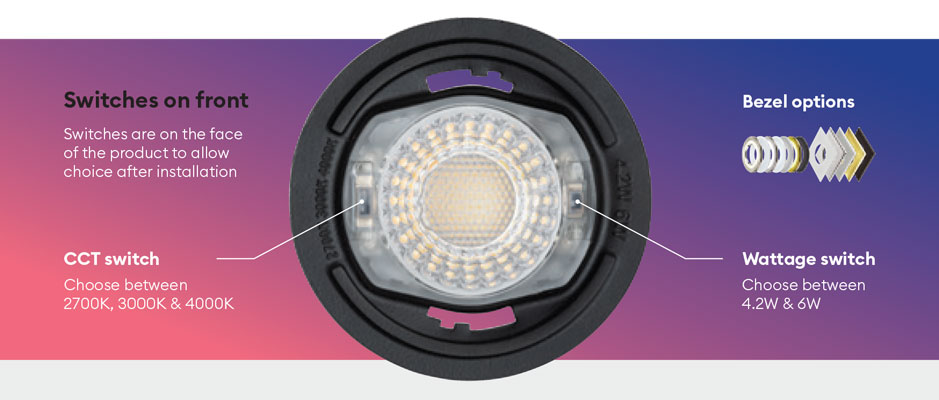
Choosing the right colour temperature in a bathroom can be a tricky decision. While the most popular choice for bathrooms is the cleaner 4000K cool white (also referred to as neutral white), it can make a room feel a bit sterile and isn’t for everything, but used in a white modern setting, it can help to create a cleaner and brighter effect. But if you’re bathing in there, you might want to consider a more relaxing tone, such as extra warm white 27000K - or maybe something in-between like the most popular overall colour temperature of 3000K. But wait! What if a downlight contained all 3 colour temperatures in 1? Well look no further than the Collingwood H2 Lite CSP CCT.
If you are considering CCT (Correlated Colour Temperature) adjustable downlights, some of them have the switch located at the back of the downlight which isn’t good for frequent switching as you’ll need to pull the entire downlight out of the ceiling, but some have the switches more conveniently located behind the bezel (shown in the image above), which means you can easily twist it off and switch it to your desired setting - so perhaps you can enjoy a more relaxing bath after all, as well as the more modern colour tones?
In addition to different colour temperatures and finishes, bathroom downlights are also available in a variety of colours, allowing you to choose options that best complement your bathroom design and décor.
While integrated LED downlights are not to everybody’s liking, they are safer than GU10, this is because most of them are SELV (Safety Extra Low Voltage) rated. The choice of lamp type, such as integrated LED or traditional bulbs, can significantly affect the safety and performance of bathroom downlights, as certain lamp technologies offer better protection against moisture and electrical hazards. This means that even if you did get an electrical shock you would barely even feel it.
You’ll also want to ensure that you’ve got the other standard specifications covered such as it being fire rated and insulation coverable. If you’re fitting downlights in a home, then they should be fire rated and if you’ve not got insulation to lay over your downlights, then get some as it makes your home considerably more energy efficient. Modern downlights are designed to be easily fitted into ceilings, making the installation process straightforward.
Wiring connectors are often overlooked as essential component for a downlight. This is especially true for people who don’t wire downlights regularly. When you’ve wired lots of downlights with fiddly screw terminals with your hands above your head you’ll agree that using a good wiring connector is essential. Once you’ve used a proper two part wiring connector you’ll never go back.
Easy installation features, such as push-fit connectors, make it simple to connect the wiring securely and safely, ensuring proper functionality. The Collingwood H2 Lite CSP CCT comes with one of the best wiring connectors on the market, shown in the image below:
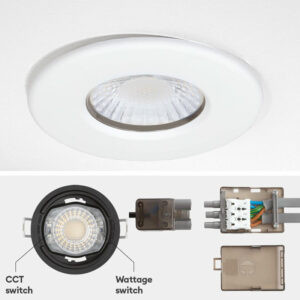
Collingwood H2 Lite CSP CCT LED Downlight